The Future Of Dynamic Pricing: AI Meets Retail Data
Dynamic pricing has been part of retail for a long time. Retailers have always adjusted prices based on seasonality, demand, inventory levels, and competitive pressure. What’s changed is not the concept itself, but the speed and complexity at which pricing decisions now need to happen.
Today, prices can change several times a day, sometimes even within hours, across thousands or millions of products. Customers expect those prices to feel fair and consistent, while retailers need them to remain profitable in increasingly competitive markets. Managing that balance manually is no longer realistic.
This is where AI enters the picture. But AI on its own doesn’t magically solve pricing challenges. Its effectiveness depends almost entirely on the quality of the data feeding it. Without accurate, timely, and comprehensive retail data, even the most advanced pricing models struggle to produce meaningful results.
The future of dynamic pricing sits at the intersection of AI and retail data. Understanding how those two elements work together is becoming essential for any retailer looking to compete at scale.
Data-Driven Pricing
Turn market data into smarter pricing decisions.

Why Dynamic Pricing is Becoming The Default
Retail has become faster, more transparent, and more competitive than ever before. Shoppers can compare prices across multiple retailers in seconds, often without leaving the page they’re already on. At the same time, competitors are adjusting their pricing strategies continuously in response to market changes.
In this environment, static pricing quickly becomes a disadvantage. Prices that remain unchanged for days or weeks can drift out of alignment with the market, either leaving money on the table or pushing customers toward cheaper alternatives.
Dynamic pricing allows retailers to respond to changes as they happen. Instead of relying on periodic reviews or manual updates, prices can adjust based on real market signals, such as competitor movement, changes in demand, or shifts in inventory levels.
For many retailers, dynamic pricing is no longer about gaining an edge, but just about keeping up.
Where AI Fits into Modern Pricing Strategies
AI plays a supporting role in dynamic pricing, not a standalone one. Its strength lies in its ability to process large volumes of data, identify patterns, and make predictions that would be difficult or impossible for humans to manage manually.
Modern AI pricing systems can evaluate how competitors price similar products, how demand responds to price changes, and how different pricing strategies affect revenue and margins over time. They can also test pricing adjustments and learn from the results, gradually improving performance as more data becomes available.
However, AI doesn’t create insight on its own; it amplifies the insight already present in the data. When the data is strong, AI can be remarkably effective. When the data is incomplete, outdated, or inaccurate, AI simply accelerates poor decisions.
This is why successful pricing strategies focus as much on data quality as they do on model sophistication.
Why Retail Data Matters More Than the Algorithm
There’s a growing tendency to treat AI models as the primary driver of pricing success. In reality, data quality has a far greater impact on outcomes than the specific algorithm being used.
Retail pricing data is inherently volatile. Competitor prices change frequently. Promotions start and end without notice. Inventory levels fluctuate throughout the day. Consumer demand varies by region, channel, and timing.
If an AI model is trained on stale data or fed incomplete market signals, its recommendations quickly lose relevance. Prices may appear optimized on paper, but fail to reflect actual conditions in the market.
Retailers that succeed with dynamic pricing understand that the real challenge lies in building reliable data pipelines. Once that foundation is in place, AI becomes a powerful tool rather than a fragile dependency.
The Role of Web Data in Dynamic Pricing
Web data provides retailers with visibility into the broader competitive landscape. It allows pricing teams to understand not only their own performance, but how the market around them is behaving in real time.
This typically includes publicly available information such as competitor prices, promotional activity, product availability, assortment changes, and regional price variations. When collected consistently, this data reveals patterns that are difficult to spot manually.
For example, web data can show how competitors respond to seasonal demand, how long promotions typically last, or how prices vary between regions. These insights help pricing teams make decisions that are grounded in reality rather than assumptions.
Over time, web data becomes the backbone of dynamic pricing systems, providing the context AI needs to make informed recommendations.
How AI and Web Data Work Together in Practice
The most effective pricing systems treat AI and web data as part of a continuous feedback loop.
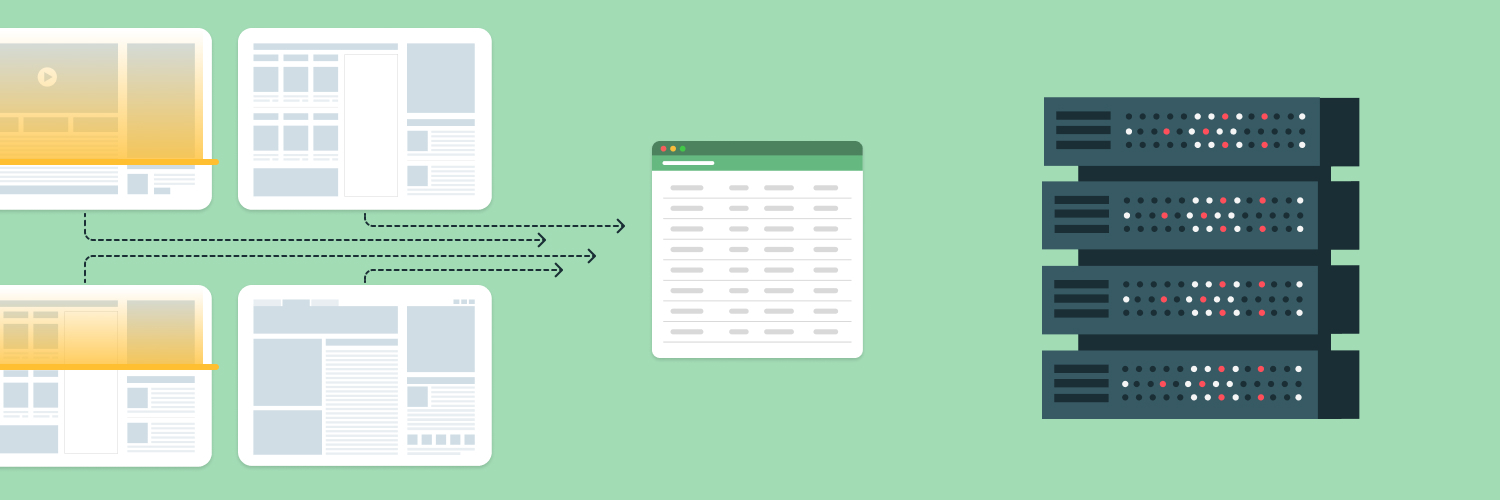
Web data supplies up to date market signals, which AI models analyze to recommend pricing adjustments. Those adjustments are then applied in the market, where their performance can be measured in terms of sales, margins, and customer behavior. The results feed back into the system, allowing the model to learn and adapt.
This cycle repeats continuously, enabling pricing strategies to evolve alongside market conditions. Without this loop, AI models become static and pricing decisions turn reactive rather than responsive.
The goal isn’t to predict the future perfectly, but to shorten the gap between market change and pricing response.
What Happens When Data Pipelines Fall Behind
One of the biggest risks in dynamic pricing isn’t sudden failure, but gradual degradation. Data continues to flow, but it slowly becomes less accurate or less representative of the market.
Competitor prices may update more frequently than your system captures. Regional variations may be missed. Promotions may expire without being reflected in the model. Over time, these small inconsistencies compound.
When pricing performance starts to slip, teams often attribute it to market volatility or consumer behavior. In many cases, the real issue is that the data feeding the pricing system is no longer keeping pace with the market.
This is why refresh frequency, coverage, and data reliability are just as important as the pricing logic itself.
Data-Driven Pricing
Turn market data into smarter pricing decisions.
Scaling Dynamic Pricing Without Adding Complexity
As retailers expand into new markets and add more products, pricing systems naturally become more complex. More SKUs mean more competitors to track. More regions mean more price variations. More frequent updates increase pressure on data collection infrastructure.
Scaling dynamic pricing successfully requires planning for this complexity rather than reacting to it. Teams need infrastructure that can handle frequent data refreshes without breaking, along with monitoring systems that surface issues before they affect pricing decisions.
Consistency matters here. A pricing system that works well for a small product catalog may struggle as volume increases unless the underlying data layer is designed to scale from the start.
Ethics, Transparency, and Responsible Pricing
As pricing becomes more automated, retailers face increased scrutiny from customers and regulators alike. Shoppers want to understand why prices change, and regulators expect pricing practices to be fair and compliant.
Responsible use of publicly available web data plays an important role in addressing these concerns. Ethical data collection ensures that pricing decisions are based on transparent market signals rather than opaque or questionable sources.
Retailers that prioritize responsible data practices build trust with customers while reducing long term risk. This trust becomes increasingly valuable as pricing systems grow more automated and more visible.
What the Future of Dynamic Pricing Looks Like
Looking ahead, dynamic pricing will continue to evolve toward greater automation, granularity, and personalization. AI models will become better at anticipating demand shifts rather than simply reacting to them. Prices will adjust more precisely based on region, channel, and timing.
At the same time, competitive pressure will increase as more retailers adopt similar tools. The advantage will no longer come from having dynamic pricing, but from executing it well.
Retailers that invest in strong data foundations, resilient infrastructure, and thoughtful pricing strategies will be best positioned to succeed as the landscape continues to change.
Explore Our Free Retail Ebook: Unlocking E-Commerce Profitability
If you’re interested in how data underpins effective pricing strategies, our free guide, Unlocking E-Commerce Profitability: How Web Data Powers Pricing, Performance, and Growth, offers a deeper look at how leading retailers use web data in practice.
The guide explores how real time market data supports smarter pricing decisions, competitor monitoring, and long term growth. It focuses on practical approaches that teams can apply without adding unnecessary complexity.
Inside the guide, you will learn:
- How data collection drives more effective pricing strategies
- Real world examples of price monitoring in action
- The four step data cycle powering modern e commerce
- How to scale operations ethically and efficiently
- Tips for unlocking growth through automation and insight
If you’re building or refining a dynamic pricing strategy, this guide provides clear, actionable insights grounded in real retail use cases.
Download your free copy and start turning data into a competitive advantage.
How Rayobyte Supports Data Driven Pricing
Rayobyte works with retailers, marketplaces, and pricing technology teams who rely on high quality web data to keep their dynamic pricing systems running smoothly. Our infrastructure is built to handle frequent updates, large scale data collection, and global market coverage without adding unnecessary complexity.
We provide access to reliable proxy networks designed for stability, accurate geolocation, and predictable performance, so teams can collect pricing and availability data consistently even as markets shift and competition heats up.
And we do more than just provide infrastructure. We work closely with our customers to help them design data pipelines that scale comfortably, spot performance issues early, and adapt as pricing strategies evolve.
If your team wants to strengthen the data foundation behind dynamic pricing, we can help you build a system that stays accurate, resilient, and ready for whatever comes next.
Data-Driven Pricing
Turn market data into smarter pricing decisions.