Why Scraping Pipelines Fail in Production (and How to Prevent It)
There’s a very specific kind of optimism that shows up right before a scraping pipeline goes live.
You’ve tested everything locally. The scripts run cleanly. Data flows into your database exactly as expected. Parsers behave. Success rates look strong. Infrastructure costs are reasonable. It all feels under control.
Then you push to production.
At first, everything still looks fine. The system handles live traffic. Jobs complete. Dashboards populate. You breathe a little easier.
And then, slowly, things start to shift.
Response times edge upward. A handful of requests fail. Retry counts increase. A few data gaps appear in the output. You patch a couple of things, maybe increase a timeout or add another retry layer, and things stabilize for a while. Then the same issues reappear, only slightly worse.
This pattern is incredibly common, and it’s rarely caused by one dramatic mistake. Scraping pipelines tend to fail in production because production introduces real-world pressure that testing simply doesn’t simulate.
If you want scraping infrastructure that survives long term, you have to design for that pressure from the beginning. Let’s look at why pipelines fail once they’re live and, more importantly, how to build them so they don’t.
Scrape at Scale With Chromium Stealth Browser
Self-hosted, Linux-first, compatible with all automation frameworks.

The Gap Between Testing and Production
In testing environments, everything is controlled. You’re running at limited volume, usually from a small number of IPs, and you’re interacting with sites in short bursts rather than sustained cycles. The traffic you generate doesn’t meaningfully stand out, and the infrastructure isn’t under real stress.
Production changes that dynamic entirely.
Volume increases significantly, refresh cycles become continuous rather than occasional, concurrency rises as you scale across categories, regions, or endpoints, and your scraper stops looking like a light touch and starts behaving like a persistent presence.
The biggest misconception teams make is assuming that a successful test run validates long-term stability. Testing confirms that your logic works. Production determines whether your architecture holds up.
The difference between those two things is where most failures begin.
Traffic Concentration Becomes Visible at Scale
One of the first stress points in production is traffic concentration.
When you’re scraping at low volume, routing requests through a small proxy pool or even a single IP might work without any obvious issues. As volume grows, repetition becomes more visible. Even if the data you’re collecting is publicly available, patterns begin to stand out.
Websites monitor traffic behavior over time, not just single requests. When a single IP repeatedly accesses similar pages at regular intervals, protective systems start responding. Initially, that response may simply introduce latency. Over time, it can escalate to rate limiting or blocking.
What makes this particularly tricky is that it rarely happens all at once. Instead, performance gradually declines. Success rates dip slightly. Certain endpoints become less reliable. Teams often interpret these symptoms as random instability rather than recognizing them as signs of concentrated traffic.
Preventing this issue requires thoughtful distribution from the outset. Requests should be spread across a sufficiently large IP pool. Load should be balanced intentionally rather than incidentally. Production scraping must look sustainable over time, not just functional in short bursts.
Retry Logic Can Create a Cascade of Failures
Retries are one of the most misunderstood parts of scraping infrastructure.
It feels intuitive to add a retry when something fails. After all, temporary network glitches happen, and a second attempt often succeeds.
The problem begins when retries are layered on top of an already strained system. If a percentage of requests are failing because of traffic concentration or reputation degradation, automatic retries amplify the load. What started as a ten percent failure rate can quickly turn into thirty percent additional traffic once retry attempts are factored in.
This creates a feedback loop. More retries increase total volume. Increased volume worsens performance. Worsened performance generates more retries.
In production, this can escalate quickly without anyone noticing until infrastructure costs spike or datasets show significant gaps.
The solution isn’t eliminating retries entirely, but implementing them intelligently. Backoff strategies should space out repeated attempts. Retry limits should prevent runaway amplification. Monitoring should treat retry ratios as a health indicator rather than a background detail.
Retries should support stability, not undermine it.
IP Reputation Degrades Gradually
Another common source of production failure is IP reputation erosion.
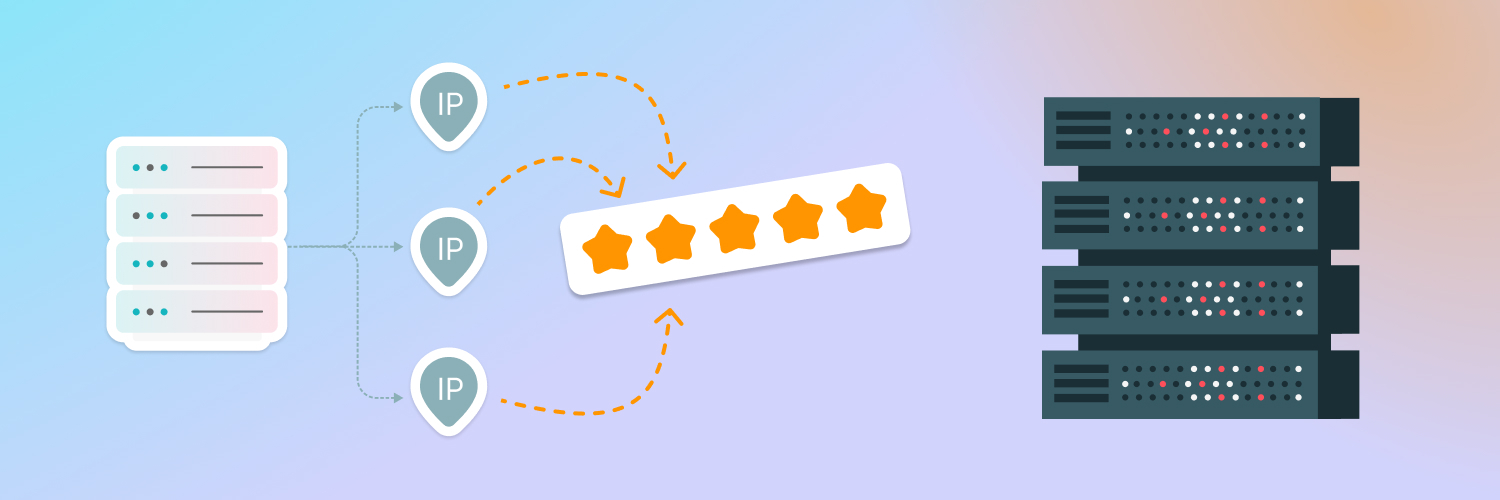
When pipelines scale, the behavioral signals associated with each IP accumulate more quickly. A small IP pool handling increasing concurrency will eventually start exhibiting patterns that websites classify as aggressive or automated.
Unlike an obvious block, reputation degradation often manifests as subtle friction. Requests take longer to return. Certain pages behave inconsistently. A small percentage of responses contain incomplete data.
Because these symptoms are gradual, teams may misattribute them to random variance or temporary issues. Meanwhile, the underlying trust profile of their IP pool continues to weaken.
Maintaining healthy IP reputation in production requires long-term thinking. Traffic should be distributed evenly. Sudden spikes should be avoided where possible. Underperforming IPs should be identified and replaced before complete failure occurs.
Reputation isn’t a binary state. It’s a moving average of behavior over time.
Scrape at Scale With Chromium Stealth Browser
Self-hosted, Linux-first, compatible with all automation frameworks.
Website Changes Break Assumptions
Production scraping also fails for a simpler reason: websites change.
HTML structures evolve, CSS class names shift, dynamic elements are introduced, and even small adjustments to layout can disrupt parsers or change how data is rendered.
In testing, you’re working against a specific version of a page. In production, you’re interacting with a moving target.
The most dangerous failures here are silent ones. Your scraper may still return data, but certain fields could be empty or misaligned. Unless you’re validating outputs rigorously, these issues can go unnoticed for days or weeks.
Preventing this requires more than resilient parsing logic. It requires monitoring at the data level. Field completeness checks, anomaly detection on value distributions, and automated validation tests can surface structural changes early.
Scraping pipelines should assume that their targets will evolve. Adaptability is part of stability.
Geographic Drift Creates Subtle Inaccuracies
For pipelines collecting region-specific data, geolocation consistency is another common production risk.
If IP addresses aren’t consistently recognized in the intended region, results can drift. Search rankings may shift, prices may vary, and availability signals may differ.
Because requests still technically succeed, teams often interpret these changes as market fluctuations rather than infrastructure issues.
Maintaining geographic accuracy requires verifying how IPs are recognized by major geolocation databases and monitoring for regional consistency over time.
In production, accuracy is about more than just receiving a response. It’s about receiving the correct contextual response.
Scaling Without Headroom Leads to Fragility
Many pipelines fail during growth phases rather than at launch.
A system built to handle a moderate workload may perform well for months. Then business needs expand. New categories are added. Refresh intervals shorten. Volume doubles or triples.
Without architectural headroom, performance begins to degrade under the new load.
Building durable production systems means planning for growth from the beginning. That includes ensuring proxy pools are large enough to absorb increased traffic, designing rotation logic that scales gracefully, and implementing monitoring that highlights capacity strain before it becomes critical.
Scalability isn’t just about adding more servers. It’s about preserving behavioral balance as volume increases.
Monitoring Determines Whether Failures Become Crises
The difference between a manageable production issue and a full-blown crisis often comes down to monitoring.
Teams that track only job completion rates miss early warning signs. Success rate trends, latency percentiles, retry ratios, and region-level consistency provide a more complete picture.
Production scraping is less about eliminating failure entirely and more about identifying degradation early enough to intervene calmly.
When monitoring is robust, pipelines rarely fail catastrophically. Instead, they require periodic tuning.
How to Design Pipelines that Hold Up
Preventing production failures ultimately comes down to architectural mindset.
Distribute traffic intentionally rather than incidentally. Treat IP reputation as a long-term asset. Implement intelligent retry strategies. Validate outputs continuously. Monitor trends rather than snapshots.
Scraping infrastructure should be modular, with clear separation between request logic, parsing, validation, and storage layers. This makes updates easier and reduces cascading impact when something changes.
Production stability is rarely about clever tricks. It’s about disciplined design.
Working With Rayobyte
At Rayobyte, we’ve seen firsthand how scraping pipelines behave once they leave controlled environments and face real-world load. Production instability is rarely dramatic. It’s usually incremental, which makes it harder to diagnose and easier to ignore until it becomes expensive.
Our proxy infrastructure is built with production durability in mind. We focus on intelligent traffic distribution, accurate geolocation, and predictable rotation behavior so pipelines can scale without accumulating invisible friction. We work closely with teams to tune concurrency, analyze performance trends, and design systems that remain stable as volume grows.
Most importantly, we partner with customers who want sustainable scraping strategies rather than short-term bursts of output. Production scraping should feel manageable, not chaotic.
If your pipeline is starting to show strain or you’re planning to scale significantly, we’re happy to help you design infrastructure that holds up long after launch. Get in touch
Scrape at Scale With Chromium Stealth Browser
Self-hosted, Linux-first, compatible with all automation frameworks.